Embroidered shirts for boys: shirts and T-shirts
An embroidered shirt for a boy is primarily a comfortable shirt that does not restrict movement. The traditional straight cut with loose sleeves and a gusset under the armpit is ideal for this. This section contains children's embroidered shirts for boys: long and short-sleeved shirts, embroidered T-shirts, vests, and sets.
Types of models
Long-sleeved embroidered shirt
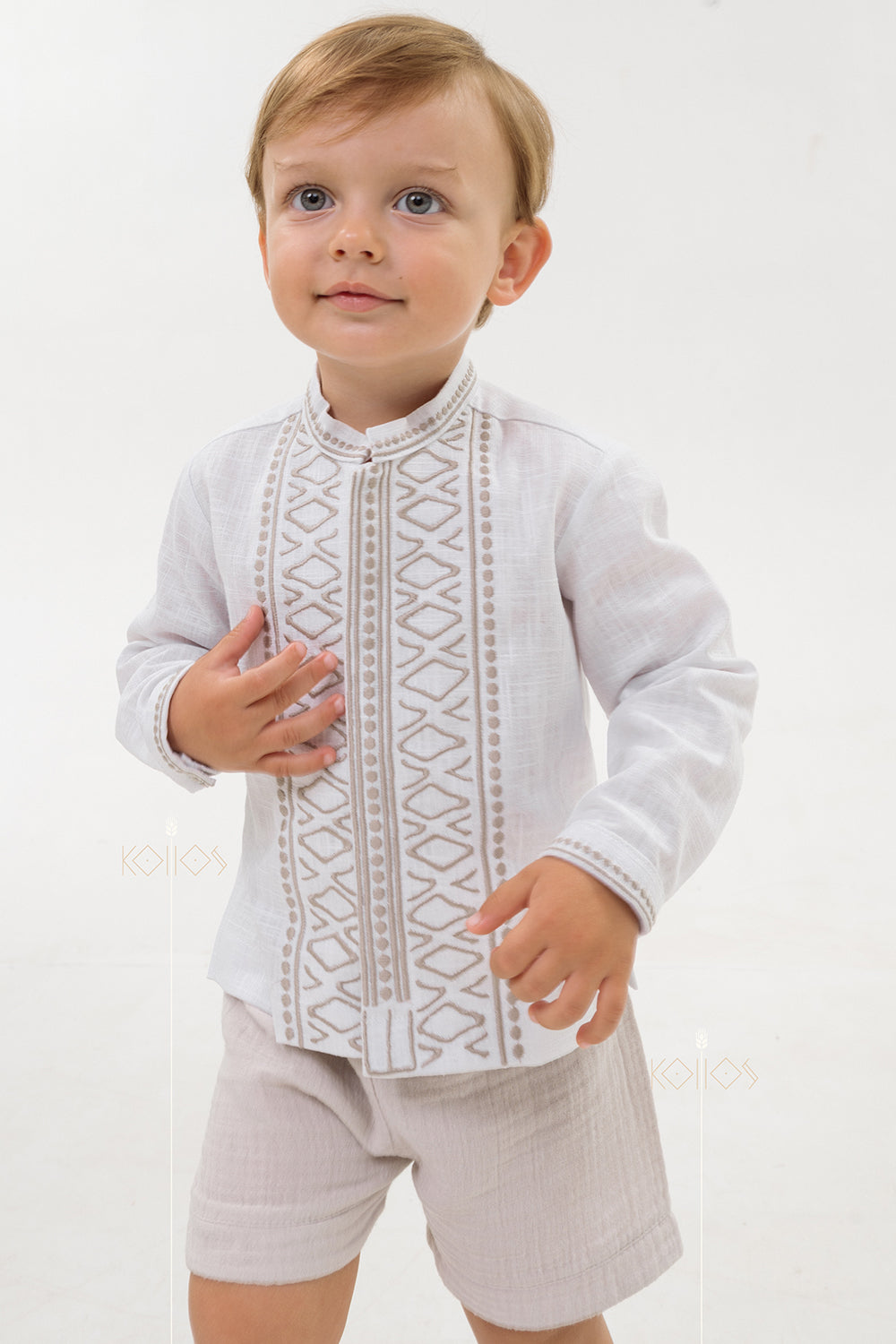
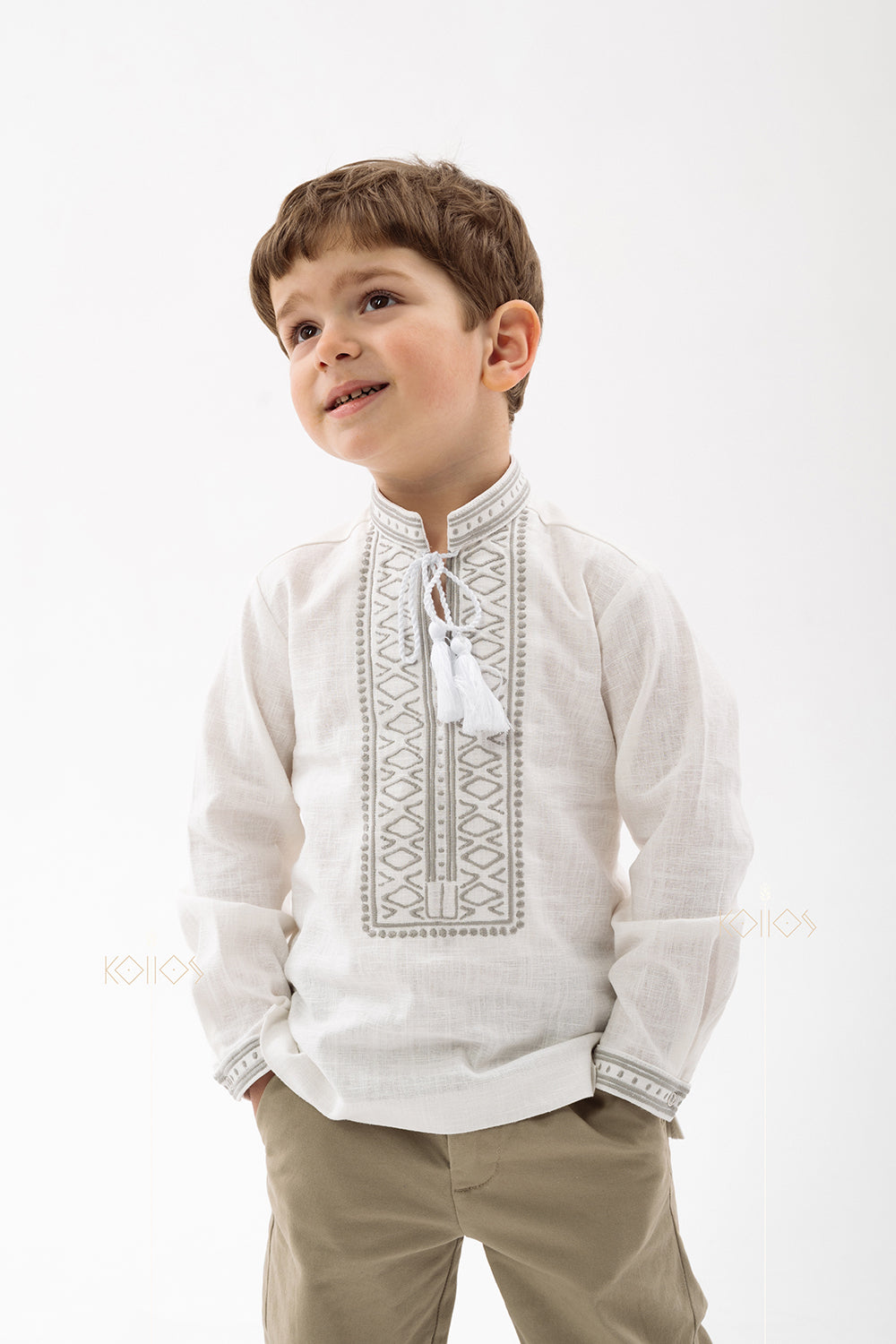
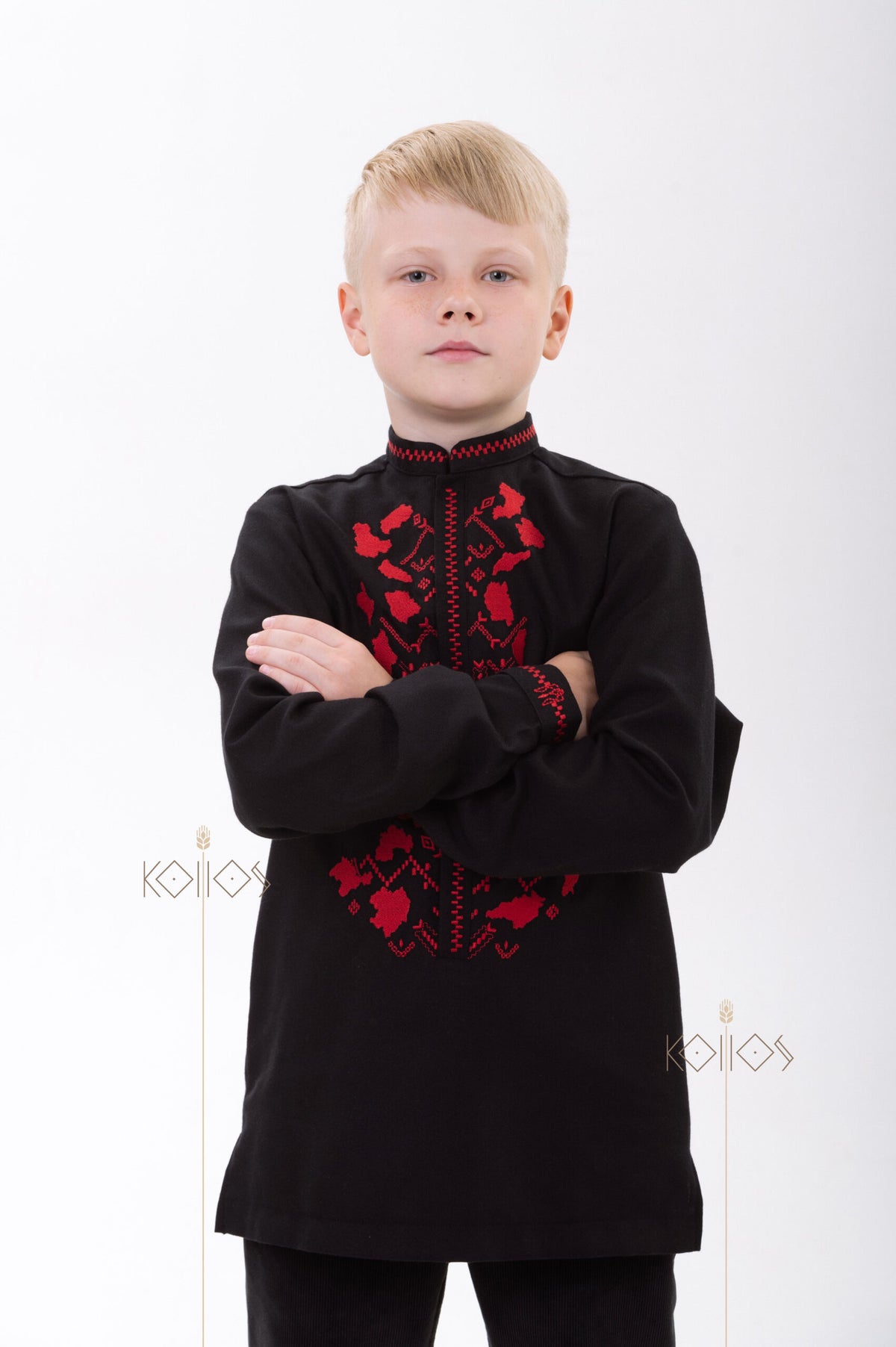
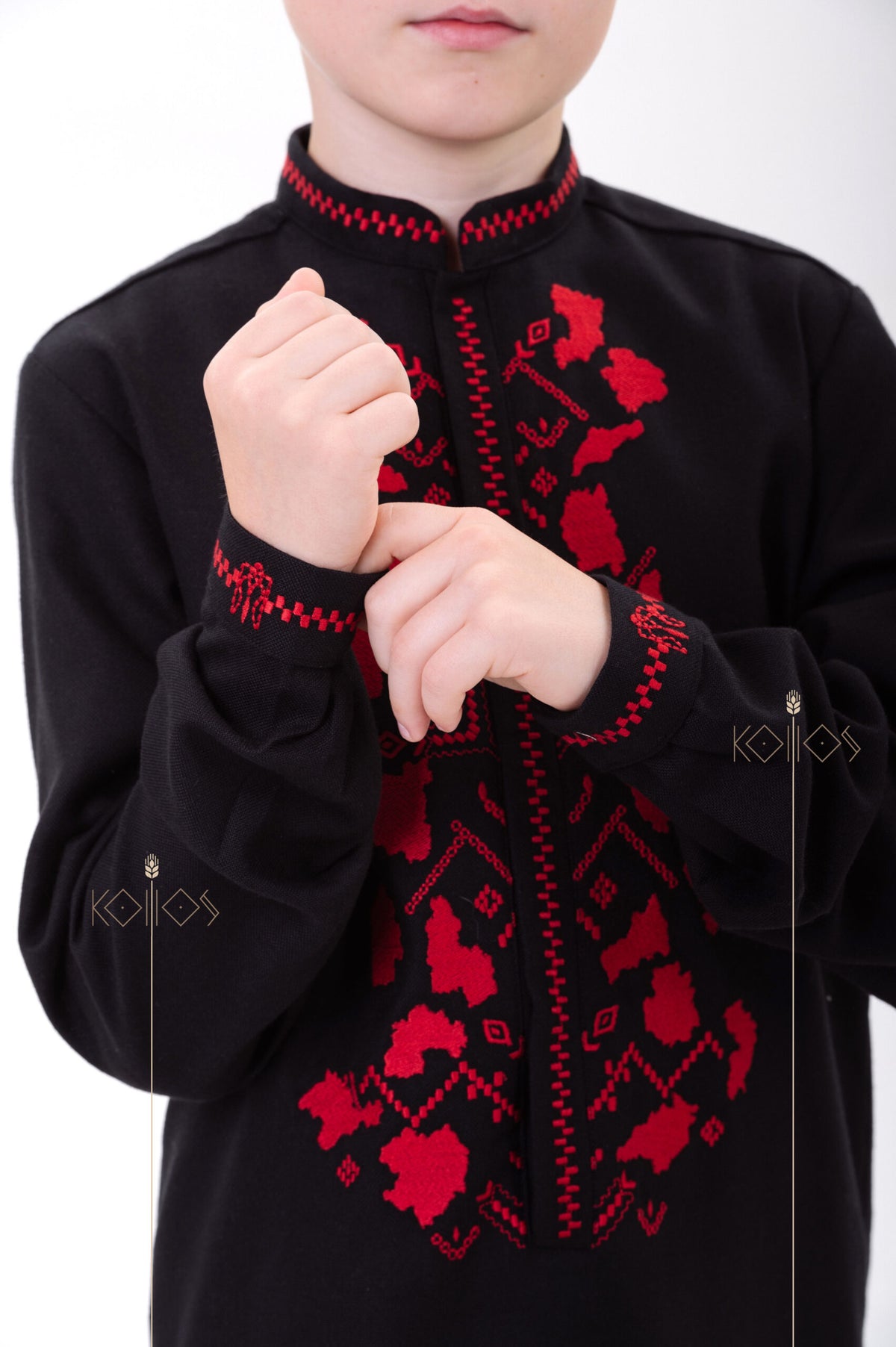
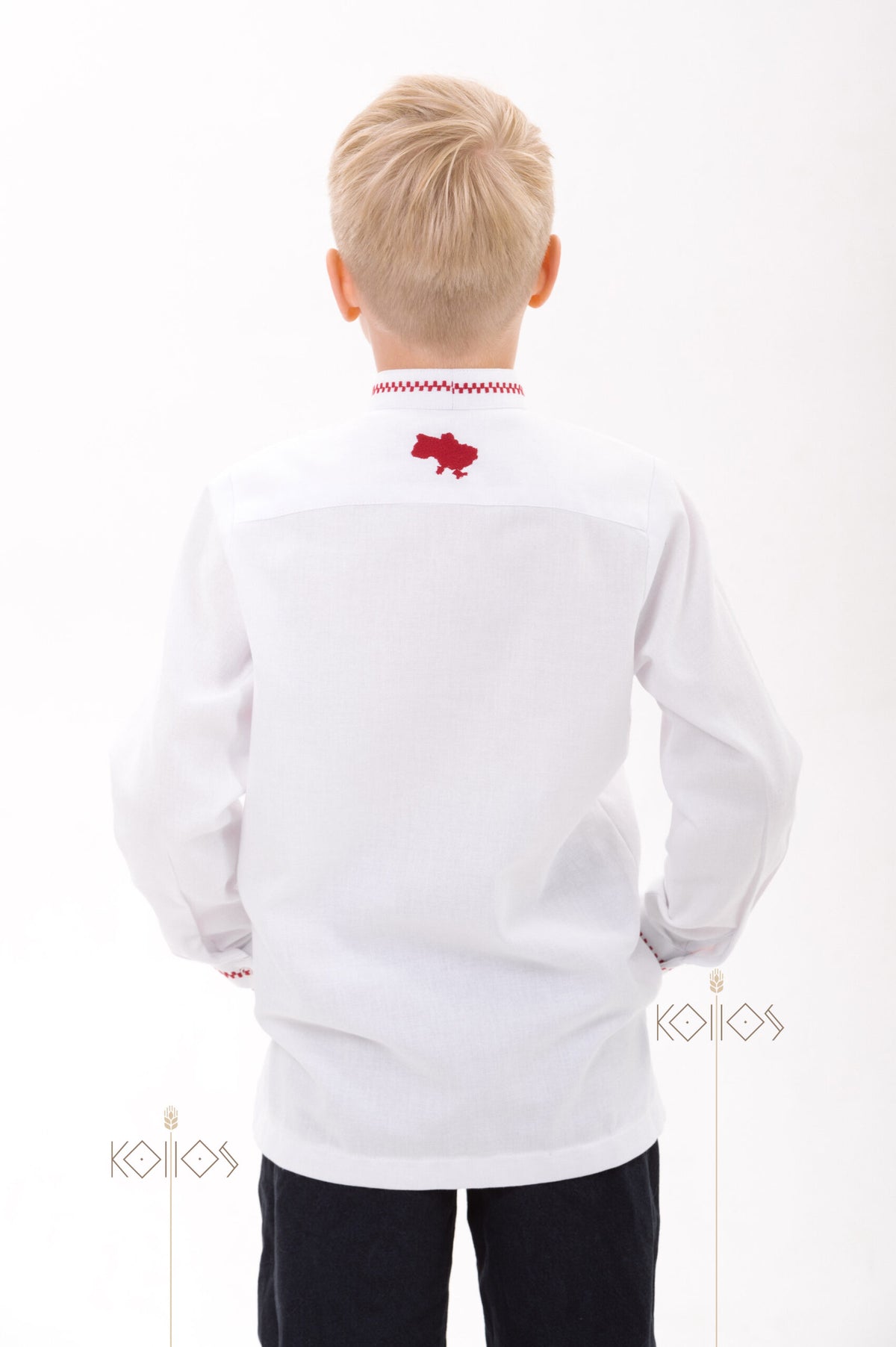
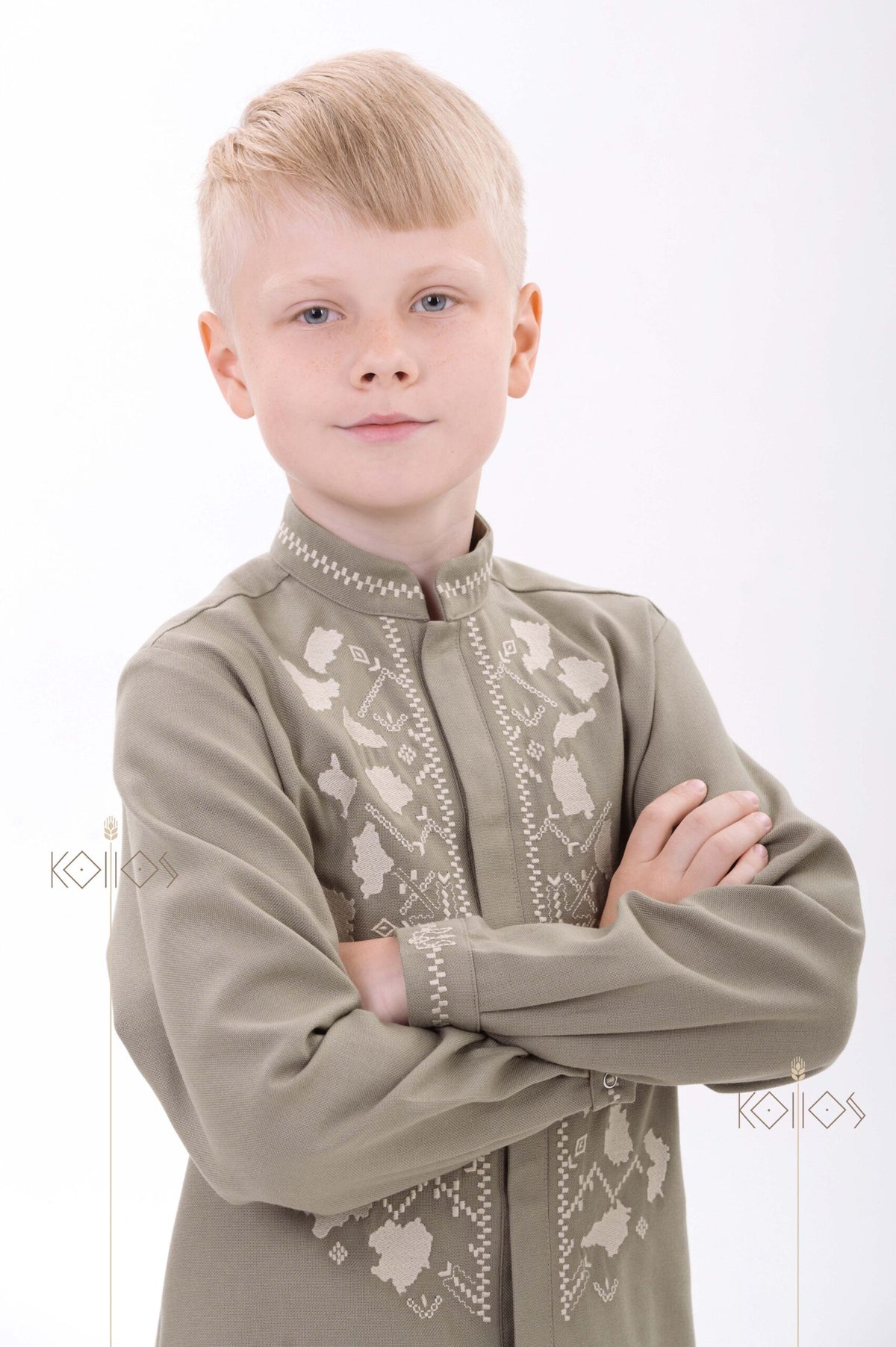
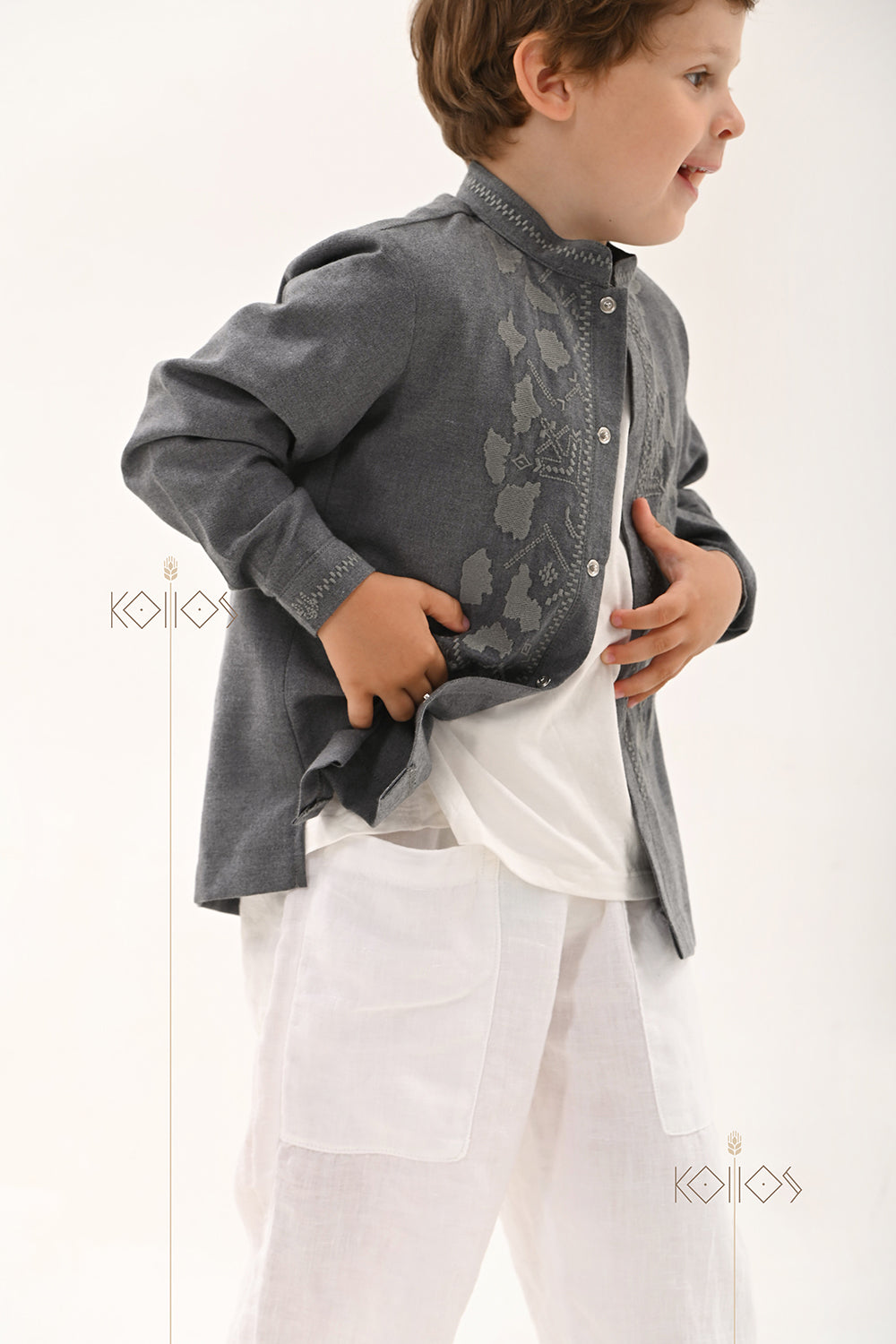
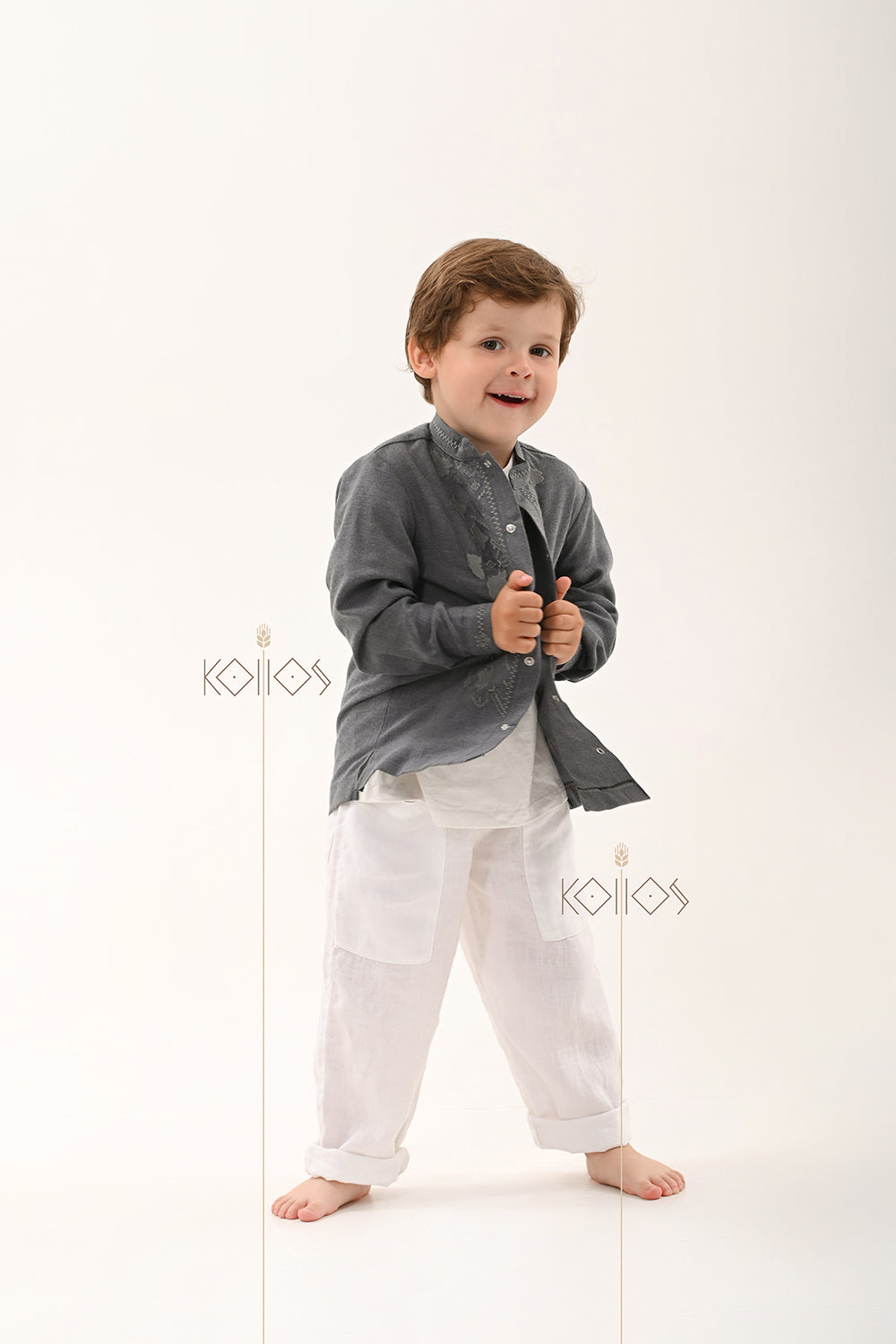
A classic for holidays and school events. An embroidered shirt for a boy of this cut has embroidery on the collar, placket, and cuffs, a straight and loose fit.
Short-sleeved shirt
A summer option, comfortable for hot weather and for active children.
Embroidered T-shirt
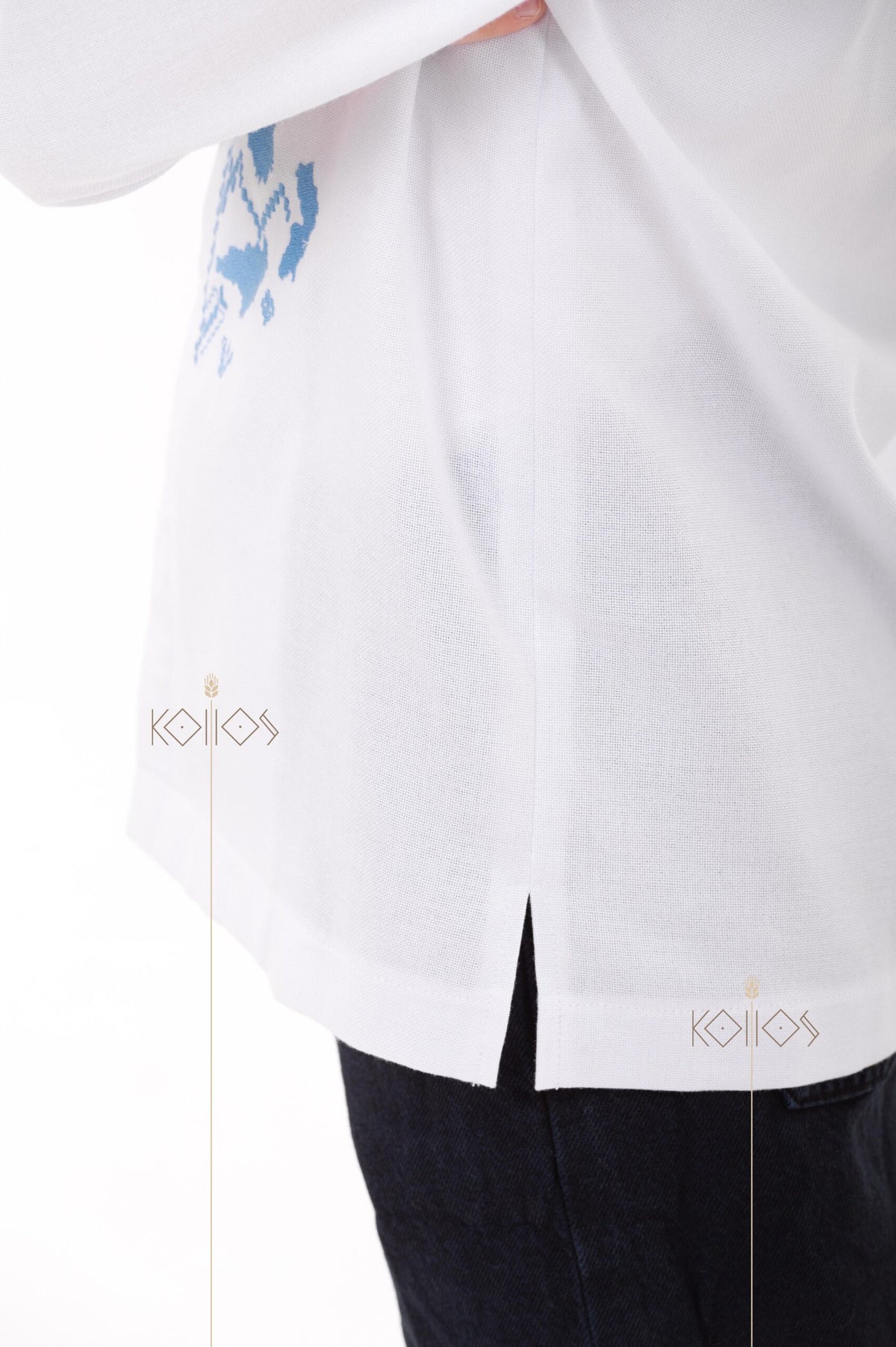
The most practical everyday option: knitwear with an embroidered ornament on the chest or neckline. Does not require ironing and withstands frequent washing.
Vest
An outer layer for special occasions that completes the look.
How to choose a size
The size is determined by height in centimeters. Take the height, chest circumference, and sleeve length measurements and compare them with the model's size chart. The straight cut of a child's embroidered shirt implies a loose fit, so do not choose one that is too tight: the shirt should sit freely on the shoulders.
One size up is acceptable: the sleeve can be rolled up, and the shirt is worn untucked. Two sizes up is too much: an oversized shirt slips down and looks messy.
Fabrics
For children's shirts, linen, semi-linen, batiste, and cotton are used. Batiste and thin cotton are the softest, suitable for the youngest. Linen is stronger and holds dense embroidery better, so it is appropriate for festive models for older children. For embroidered T-shirts, medium-density cotton knitwear is used.
Pay attention to the wrong side: the embroidery should be neatly secured, without rigid knots and long threads.
Ornaments for boys
Traditionally, geometric motifs and symbols of strength are chosen for boys: oak leaves, rhombuses, "endless knots," stars. Classic color combinations are red-black, blue-black, restrained white on white. For preschoolers, a simple ornament of a small area works better; for older children, shirts with richer embroidery, closer to adult models, can be chosen.
For what occasions
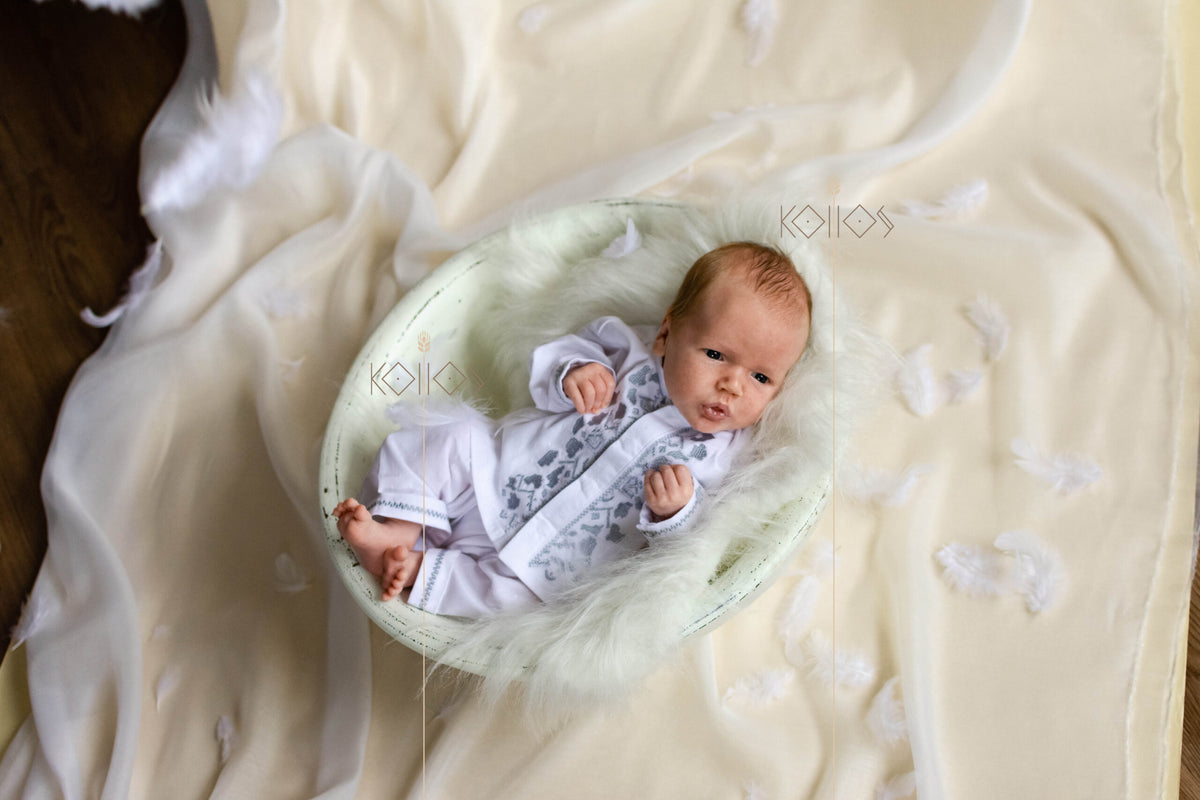
An embroidered shirt for a boy is most often bought for Vyshyvanka Day, school holidays and concerts, family celebrations, baptisms, and photoshoots. An embroidered T-shirt is taken as an everyday option – for walks, travel, or summer camp.
For family photoshoots, it is convenient to choose models from the same collection so that the ornament is repeated in adult and children's items.
What to wear with
The simplest and most reliable combination is an embroidered shirt, dark straight trousers, and closed-toe shoes. For everyday wear – an embroidered T-shirt with jeans or shorts. For formal occasions, a vest and a leather belt are added to the shirt.
Trousers should be plain: patterned bottoms clash with the shirt's ornament.
Care
Wash children's clothes more often and more delicately: up to 30 °C, with a children's detergent, with additional rinsing. Do not use bleach – it damages the embroidery thread. Wash out food and grass stains immediately.
Wash embroidered T-shirts inside out to preserve the embroidery. Dry shirts laid flat on hangers and iron them from the wrong side while the fabric is still slightly damp.
How many embroidered shirts does a boy need?
The practical minimum is two items. A festive long-sleeved shirt for Vyshyvanka Day, school events, and family occasions, and an embroidered T-shirt for everyday wear. A T-shirt withstands frequent washing, does not require ironing, and is suitable for active games, so it is usually worn most often.
A vest is added as a third item if the family often has formal events or photoshoots.
Common mistakes
The first is buying two sizes "to grow into" at once: the shirt slips off the shoulders. The second is a tight stand-up collar: the child will unbutton it all the time, and the shirt will look messy. The third is a stiff wrong side of the embroidery that rubs the neck and wrists. The fourth is synthetic fabrics that overheat and accumulate static.